What state is your company in? Typical signs of optimisation

Return on sales is still good, but declining gradually

First signals on the customer side: postponed delivery dates, more complaints

Hardly any KPIs on the performance of core processes

Unclear responsibility for delivery reliability, quality and products

Diagnosis

Steps 1 and 2: diagnosis and House of Excellence

It starts with a critical diagnosis along the 10-P model – in a workshop with your management team or as a
Corporate Health Check
. It shows where the weak points lie and which fields of action offer the greatest leverage for improving earnings.

We bring the fields of action together in a «House of Excellence»: the framework for realigning your company in a targeted way.

The benefit is immediate: for the first time, the entire management team is looking at the same picture – and it becomes clear that not everything has to be solved at once, but the right things first.
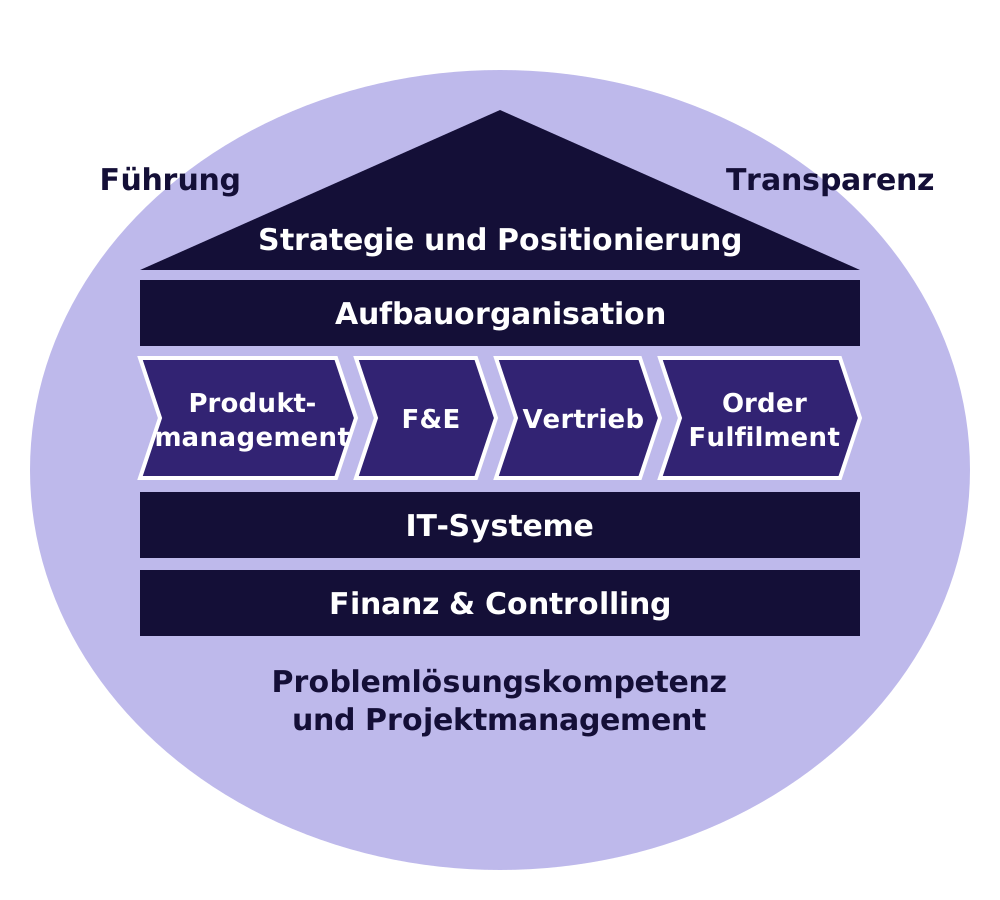
House of Excellence: Strategie und Positionierung als Dach, die Wertschöpfungskette als Säulen, IT-Systeme und Finanz & Controlling als Fundament

Fields of action and implementation

Steps 3 and 4: define the fields of action and implement them with your own teams

Product portfolio and innovation: align the portfolio with changing market requirements. Pricing and sales: make contribution margins per product and customer visible and sharpen the pricing strategy. Quality: reduce complaints, warranty and goodwill costs.

Manufacturing and supply chain: delivery reliability, inventories and productivity – the field of
Operational Excellence
. Transparency: KPIs on the performance of core processes, brought together in the
CEO cockpit
. Organisation and leadership: clear responsibility for the decisive performance parameters.

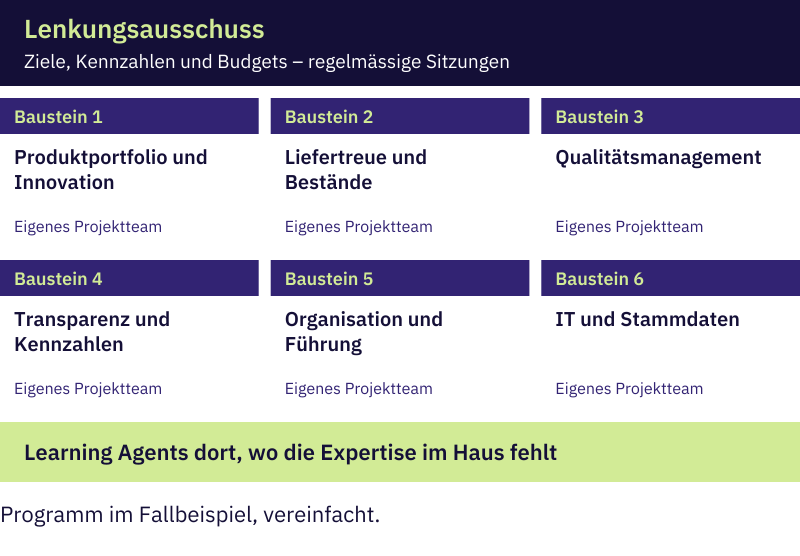
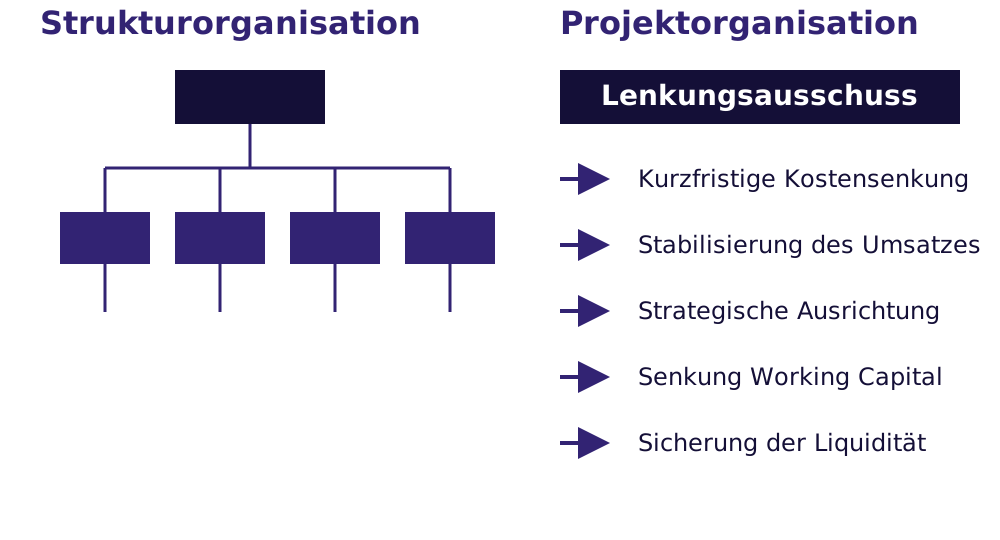
For each field of action, you appoint owners and teams from within your company. Where in-house expertise is missing, we support as learning agents and teach your teams to solve problems themselves in future. The programme is steered by a steering committee that we coordinate.

Hybrid organisation: the fields of action are mirrored in the organisational structure and steered by a steering committee

Steering

Step 5: measure effectiveness

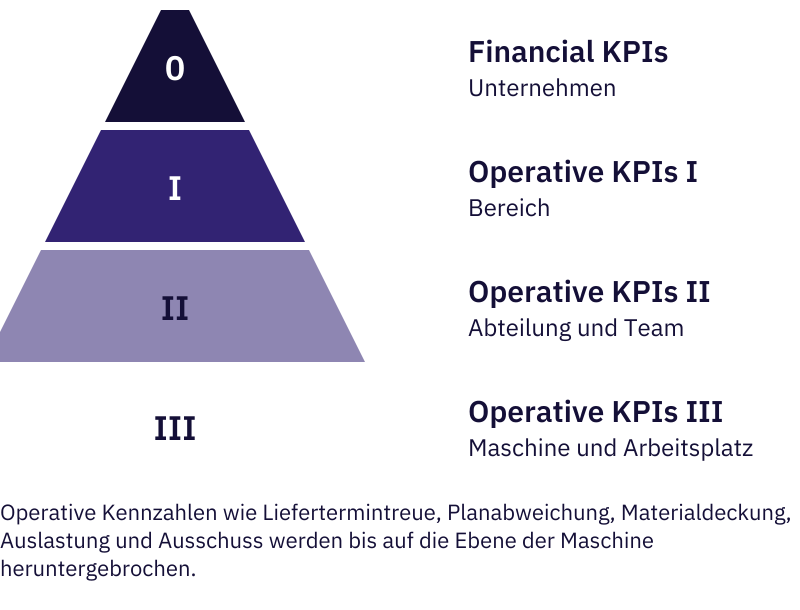
Whether the optimisation is working shows up first in the core processes and only later in the income statement. That is why we measure not only financial KPIs, but the operational performance parameters where they arise – in divisions, departments and teams, down to the machine and the workstation.

This turns delivery reliability, lead time, complaints or machine availability into everyday management tools, and the steering committee sees early on which field of action needs support.

Four KPI levels: financial KPIs for the company, below them operational KPIs for division, department and team down to machine and workplace

THE DIFFERENCE: act early

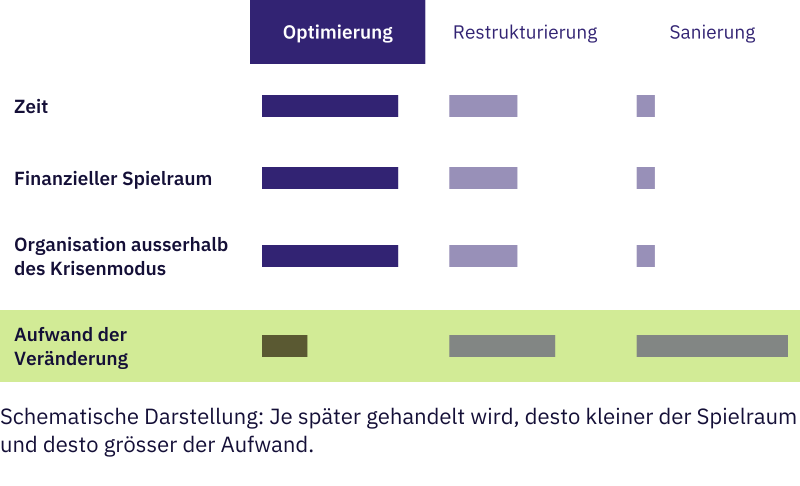
Why optimisation is the least costly form of change

In optimisation, you still have every option: time, financial headroom and an organisation that is not operating in crisis mode.

Acting now avoids a
restructuring
.

And because your own teams carry the implementation, you also recognise which managers move the company forward.

More about Institutional Learning
Schematische Darstellung: Zeit, finanzieller Spielraum und Ruhe in der Organisation nehmen von Optimierung über Restrukturierung zur Sanierung ab, der Aufwand der Veränderung steigt
Programme in the case study: steering committee above six modules with own project teams, supported by learning agents

CASE STUDY: optimisation

When technology leadership is no longer enough

A globally active special machine builder had been successful for years – until delivery reliability, quality and earning power declined.

In just a few workshop days, the company produced the diagnosis itself and set up a programme with six building blocks.

It is carried by the company's own teams and steered by a steering committee.

Read the case study

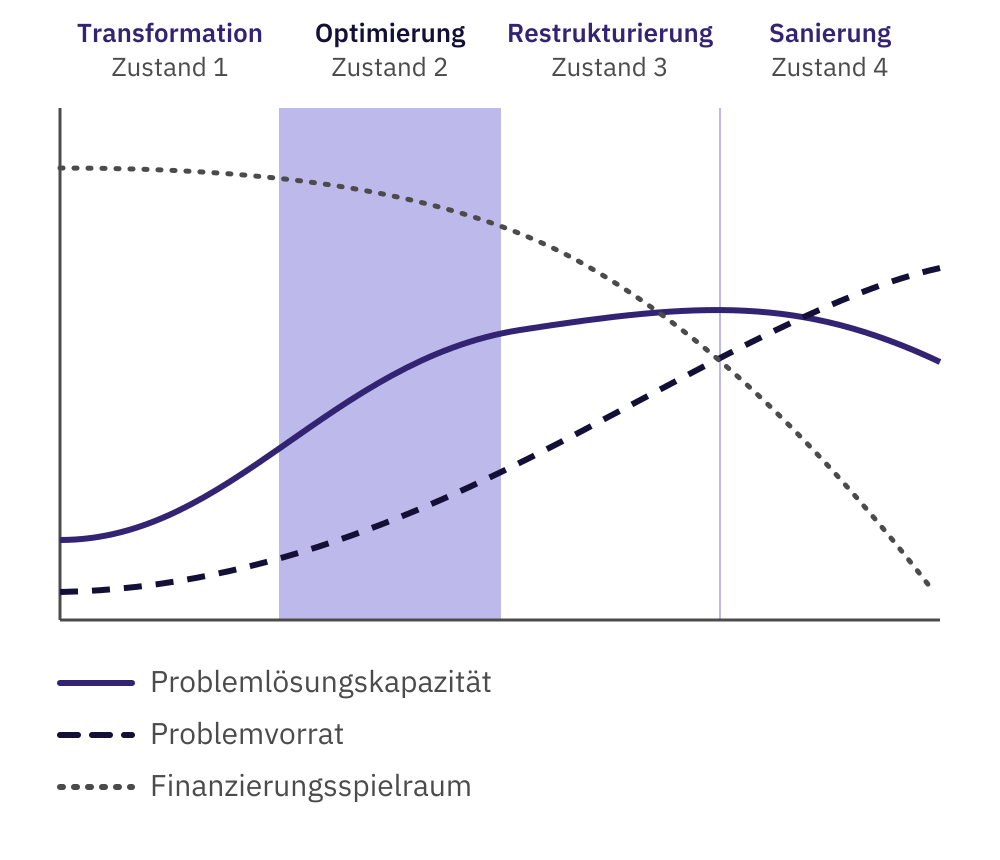
CLASSIFICATION: between transformation and restructuring

The goal: back to transformation

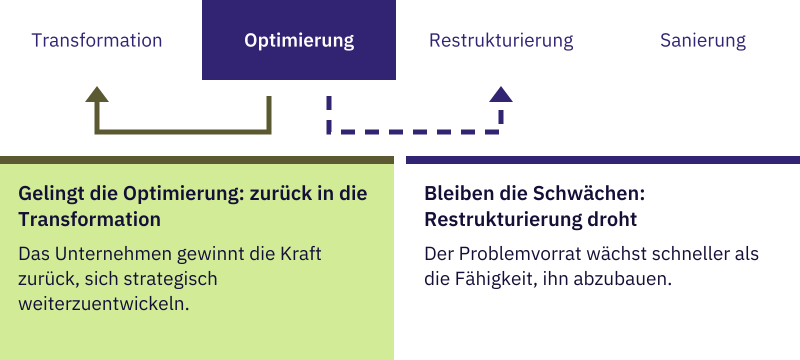
Optimisation is a transitional state. If it succeeds, your company regains the strength to develop strategically – in the state of
transformation
. If the weaknesses are not resolved, however, the problem backlog grows faster than the ability to reduce it – and a
restructuring
looms.

You decide how we support you: through classic consulting from diagnosis to implementation, through sparring and coaching for management and team leaders, or with
interim leadership
when a field of action needs an experienced manager. More about the
forms of collaboration
.

In a 30-minute conversation, we jointly assess which of the four states your company is in – transformation, optimisation, restructuring or turnaround – and which fields of action offer the greatest leverage. Not a sales pitch, but an initial assessment.

Book an initial consultation
From optimisation back to transformation when the weaknesses are fixed, or on to restructuring when they remain

FREQUENTLY ASKED QUESTIONS

Frequently asked questions about optimisation

How can I tell that my company is in the state of optimisation?

By signals that become visible before they show up in the income statement: postponed delivery dates, more complaints, a weaker price-performance ratio and missing KPIs on the performance of core processes. At that point the figures are often still good.

How does optimisation differ from Operational Excellence?

Optimisation describes the state of the company as a whole. Operational Excellence is one of the fields of action within it – the one in manufacturing and supply chain.

What is the House of Excellence?

The House of Excellence brings the fields of action with the greatest leverage together in one programme. Each field of action has owners, targets and a timeline, steered by a steering committee.

What does our organisation take on itself?

That is your decision. As a rule, your own teams carry the implementation, and we support where in-house expertise is missing.

How do I increase my company's profitability sustainably?

By addressing the causes rather than the symptoms: transparency on the performance of core processes, clear responsibilities and a portfolio that fits the market. Cost cutting alone only postpones the problem.

Our key topics

With tailored approaches and proven methods, we support you in aligning and developing your company — independently, and starting from your current economic situation.

Transformation: engineering and office area of an industrial company

Transformation

Sharpen your strategy and develop a holistic alignment to realize growth opportunities.

Learn more
Optimization: production area with assembly workstations and material flow

Optimization

Increase your problem-solving capacity and develop your organization from mediocrity to peak performance.

Learn more
Restructuring: production hall with machinery and operator workstations

Restructuring

Secure your company's viability through structural interventions and sustainable earnings optimization.

Learn more
Turnaround: production area of an industrial company with machinery and employees in motion

Turnaround

Secure your company's liquidity and continued existence and restore its earning power for the long term.

Learn more

WHERE DO YOU STAND

Where does your company stand?

The Quick Health Check takes five minutes to complete and shows which state your company is in and which fields of action offer the greatest leverage – as a five-page profile, reviewed by an experienced consultant and free of charge.