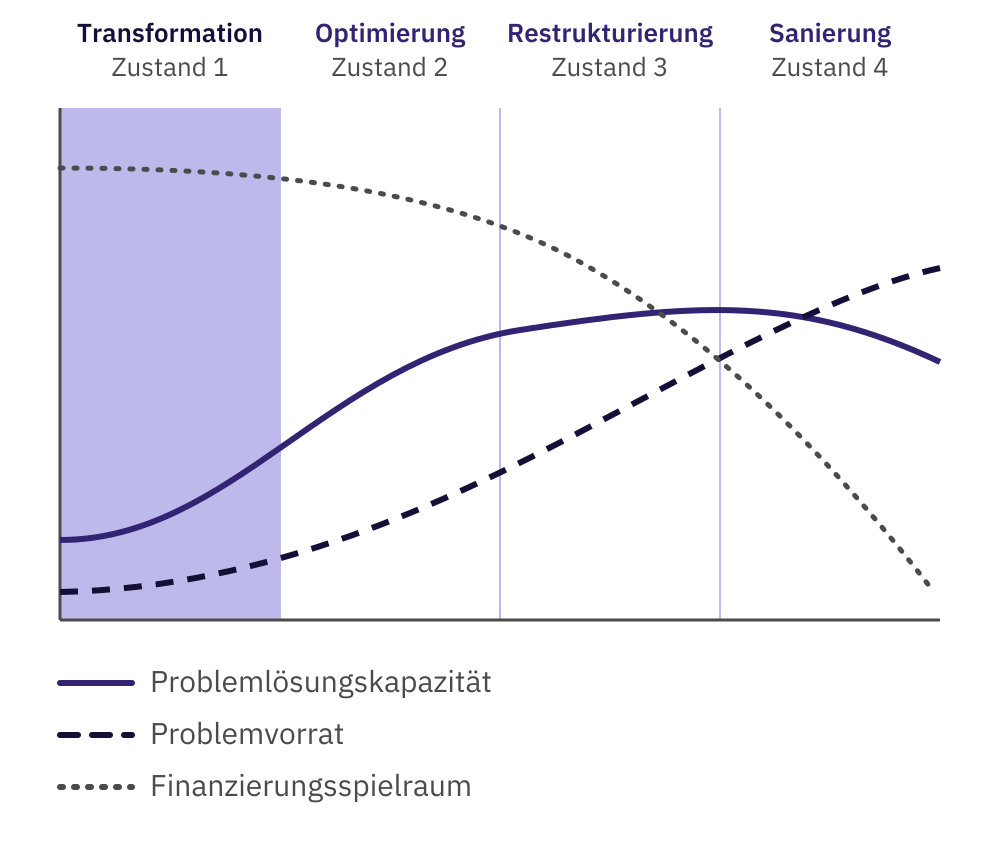
What state is your company in? Typical characteristics of transformation

Stable earnings and a company that solves its problems on its own. Ideally, new customers approach you of their own accord.

Headroom to invest in products, markets and people

New opportunities – a product, a market, a generational change – that do not readily fit the existing business model

The danger: success conceals that the positioning is losing its edge

Starting point and market

Steps 1 and 2: Self-assessment and positioning – which opportunities do you want to pursue?

It starts with a critical self-assessment by your management team: How does the company earn its money today, which products and customers carry the contribution margin, where are its unique selling points and where is the competition catching up? The diagnosis follows the ten dimensions of the 10-P model and shows what the business model is built on.

Then comes the positioning. It largely determines which market opportunities your company pursues and which it deliberately leaves aside.

Instead of guessing, we survey customers and dealers together with you: Who buys, why and through whom? The decisive purchase factors determine target segments, value proposition and sales channels.
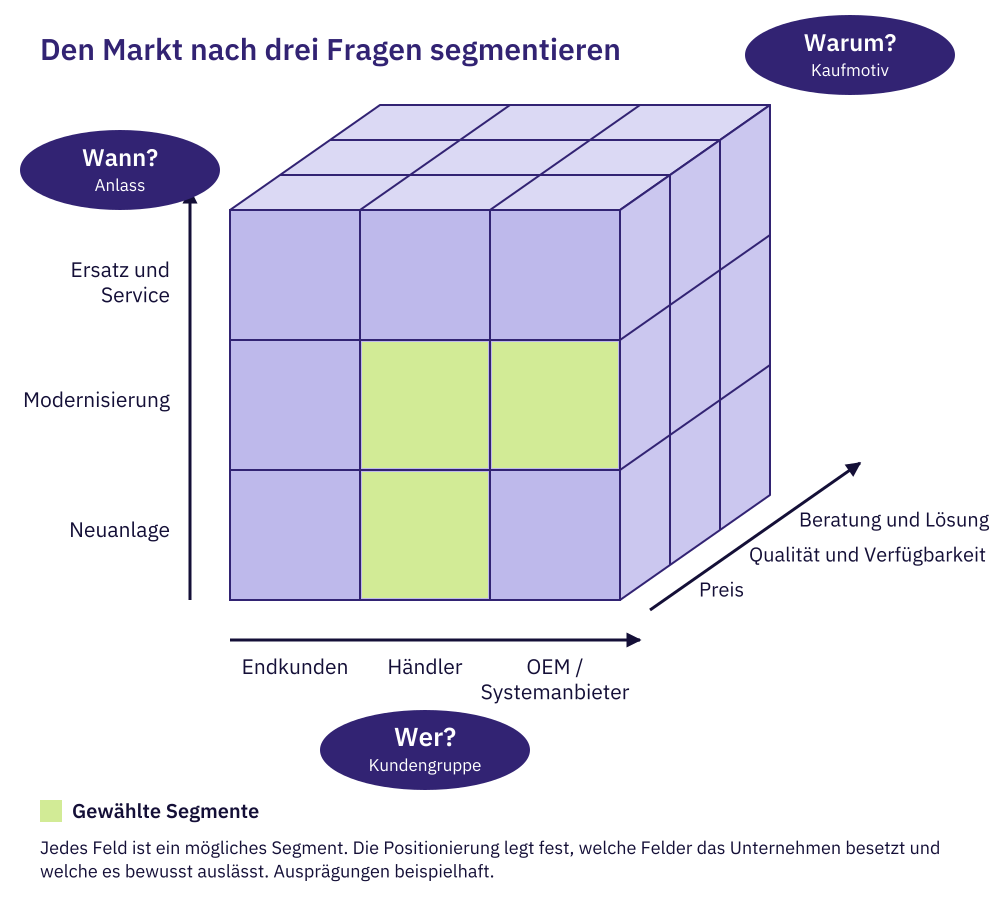
Positionierungswürfel: Marktsegmentierung nach Kundengruppe (Wer?), Kaufmotiv (Warum?) und Anlass (Wann?) mit hervorgehobenen, gewählten Segmenten

Strategy

Step 3: The strategy along the 10-P model

Based on the positioning, the strategy describes what has to change in all ten dimensions – from product and price to sales channels and partners, processes and people.

Workshops reveal the tensions between the dimensions, for example between positioning and price. From these, three to five strategic thrusts emerge.

The 10-P model: ten dimensions of corporate strategy from Positioning to Performance

Implementation and steering

Steps 4 and 5: From business goals to projects and KPIs

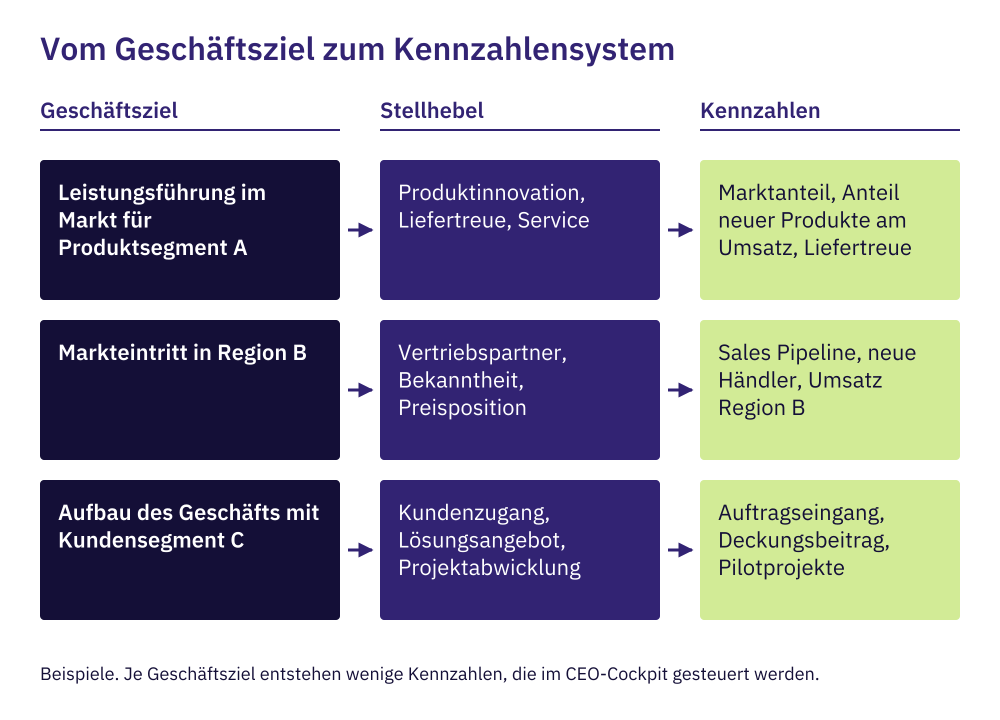
The strategic thrusts become far-reaching business goals: performance leadership in a product segment, market entry in a new region, building up business with a new customer segment. Each goal is broken down into fields of action with concrete projects, owners and a plan that takes resources and budgets into account. Pilot projects show early on whether the assumptions from the diagnosis and the customer survey hold.

From the business goals, we derive a KPI system with you: for each goal, the levers and the performance indicators that show your progress. They become visible in the
CEO cockpit
– for the company as a whole, for sales and for order fulfilment.

Vom Geschäftsziel zum Kennzahlensystem: drei Beispiel-Geschäftsziele mit Stellhebeln und abgeleiteten Kennzahlen

THE DIFFERENCE: Decisions made inside the company

Why your business model has to be developed inside the company

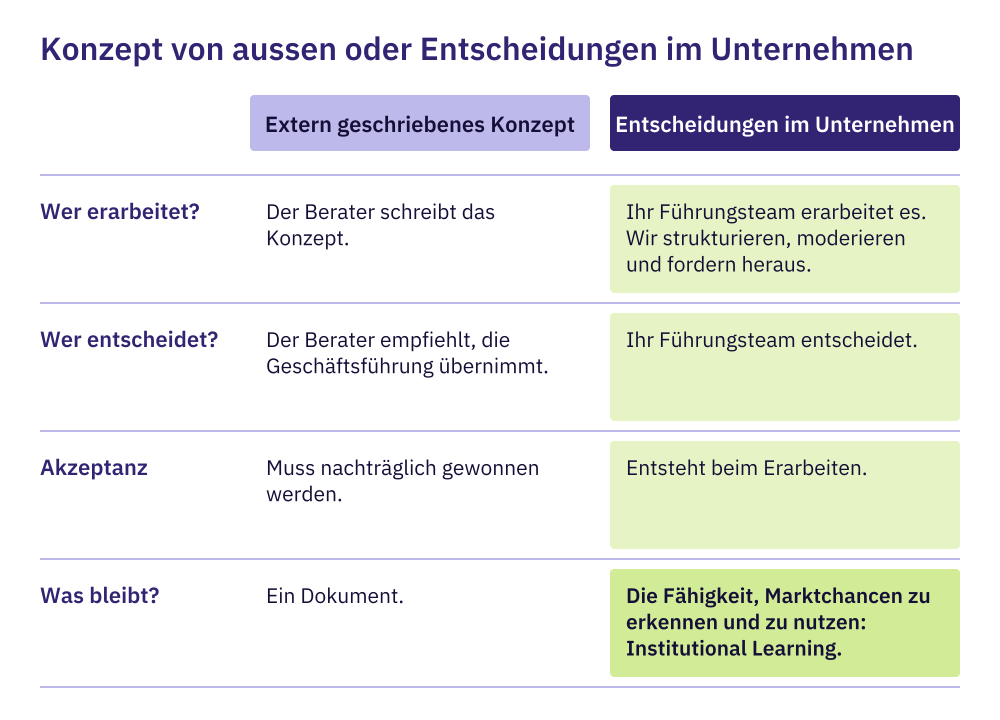
A concept written by outsiders rarely achieves the acceptance and drive for implementation that a management team brings to one it has developed itself.

That is why we do not decide on your behalf: we structure, facilitate and challenge – your management team makes the decisions.

This keeps the ability to recognise and seize market opportunities inside your company. That is Institutional Learning.

More about Institutional Learning
Vergleich: extern geschriebenes Konzept gegenüber Entscheidungen im Unternehmen – wer erarbeitet, wer entscheidet, Akzeptanz und was bleibt
Case study strategy coaching: cover image of the blog article

CASE STUDY: Strategy coaching

When an innovation needs a strategy

A long-established metalworking company had developed a promising new product, but it targeted entirely different customers than the core business.

In strategy coaching, the management team developed a strategy across all ten dimensions in three workshops and with its own customer interviews.

The result: a clear focus, a dealer model, KPIs for strategic success and an action plan – carried by a management team that developed the strategy itself.

Read the case study

CLASSIFICATION: When is a transformation needed?

Transformation is not a permanent state – and rarely a free choice

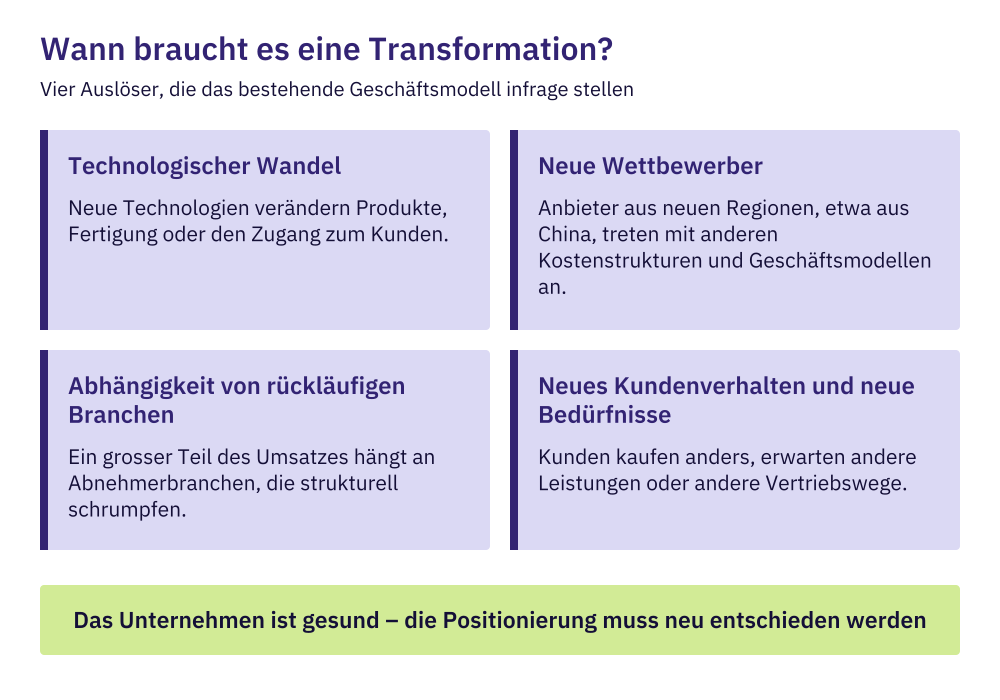
Companies that aspire to top performance are aware of the risk posed by changing markets, technologies and business models: new technologies change products, manufacturing or access to customers. Competitors, for example from China, enter the market with different cost structures and business models. Important customer industries are shrinking structurally, or customers buy differently and expect different services. That is why these companies deliberately work on the strategic development of the business – on seizing opportunities. Anyone who waits until the figures decline is already in optimisation. Those who recognise the signals early act with the greatest room for manoeuvre.

More about optimisation

You decide what form our support takes: workshops and seminars, sparring and coaching for management, or an advisory board that reviews the strategy regularly.

Forms of collaboration

The Quick Health Check shows where your company stands today: completed in five minutes, reviewed by an experienced consultant as a five-page profile, and free of charge.

Vier Auslöser einer Transformation: technologischer Wandel, neue Wettbewerber, Abhängigkeit von rückläufigen Branchen, neues Kundenverhalten – das Unternehmen ist gesund, die Positionierung muss neu entschieden werden

FREQUENTLY ASKED QUESTIONS

Frequently asked questions about strategy development

Why develop the business model further when things are going well?

Precisely then. In good times, there is the financial headroom and the time to develop positioning and business model further. Anyone who waits until the figures decline no longer has that headroom.

What is the 10-P model?

The 10-P model is the strategy and diagnosis model of 10-P Consult. It describes a company in ten dimensions, from positioning to performance measurement, and ensures that a strategy takes into account not only the market but also processes, people and KPIs.

Who works on the strategy?

The managing directors and those responsible for sales, operations and finance. We structure and facilitate; your management team makes the decisions.

How does strategy consulting for SMEs differ from consulting for large corporations?

In SMEs, few people make the decisions, and implementation lies with the same people who develop the strategy. That is why what is needed is not extensive reports but clear decisions, an action plan and a few KPIs.

How long does strategy development take?

That depends on the starting point and scope and is set out in the proposal. With focused strategy coaching, the result is available within a few months.

Our key topics

With tailored approaches and proven methods, we support you in aligning and developing your company — independently, and starting from your current economic situation.

Transformation: engineering and office area of an industrial company

Transformation

Sharpen your strategy and develop a holistic alignment to realize growth opportunities.

Learn more
Optimization: production area with assembly workstations and material flow

Optimization

Increase your problem-solving capacity and develop your organization from mediocrity to peak performance.

Learn more
Restructuring: production hall with machinery and operator workstations

Restructuring

Secure your company's viability through structural interventions and sustainable earnings optimization.

Learn more
Turnaround: production area of an industrial company with machinery and employees in motion

Turnaround

Secure your company's liquidity and continued existence and restore its earning power for the long term.

Learn more