The crisis begins long before the liquidity gap: typical early warning signs

Long-standing A customers are dissatisfied and switch to competitors (sales crisis)

High-performing employees leave the company (stakeholder crisis)

Necessary investments can no longer be financed from ongoing business (earnings crisis)

Lenders demand covenants, risk premiums and additional collateral (emerging liquidity crisis)

Approach

Out of the crisis in three phases

Phase 1, “stop the bleeding”: raise liquidity first – contractually renegotiate payment terms with customers and suppliers, agree down payments on new orders, reduce inventories, enforce customers’ purchase commitments, sell non-operating assets and consider factoring. At the same time, immediate measures take effect on purchase prices, personnel costs, sales and marketing, and other operating costs.

Phase 2, stabilisation: clear organisational structures, more efficient processes, less complexity in the product range and processes, and transparency over the key figures that matter.

Phase 3, rebuild and growth: strengthen sales, sharpen the positioning and work the markets actively again. How long each phase takes depends on the starting situation.
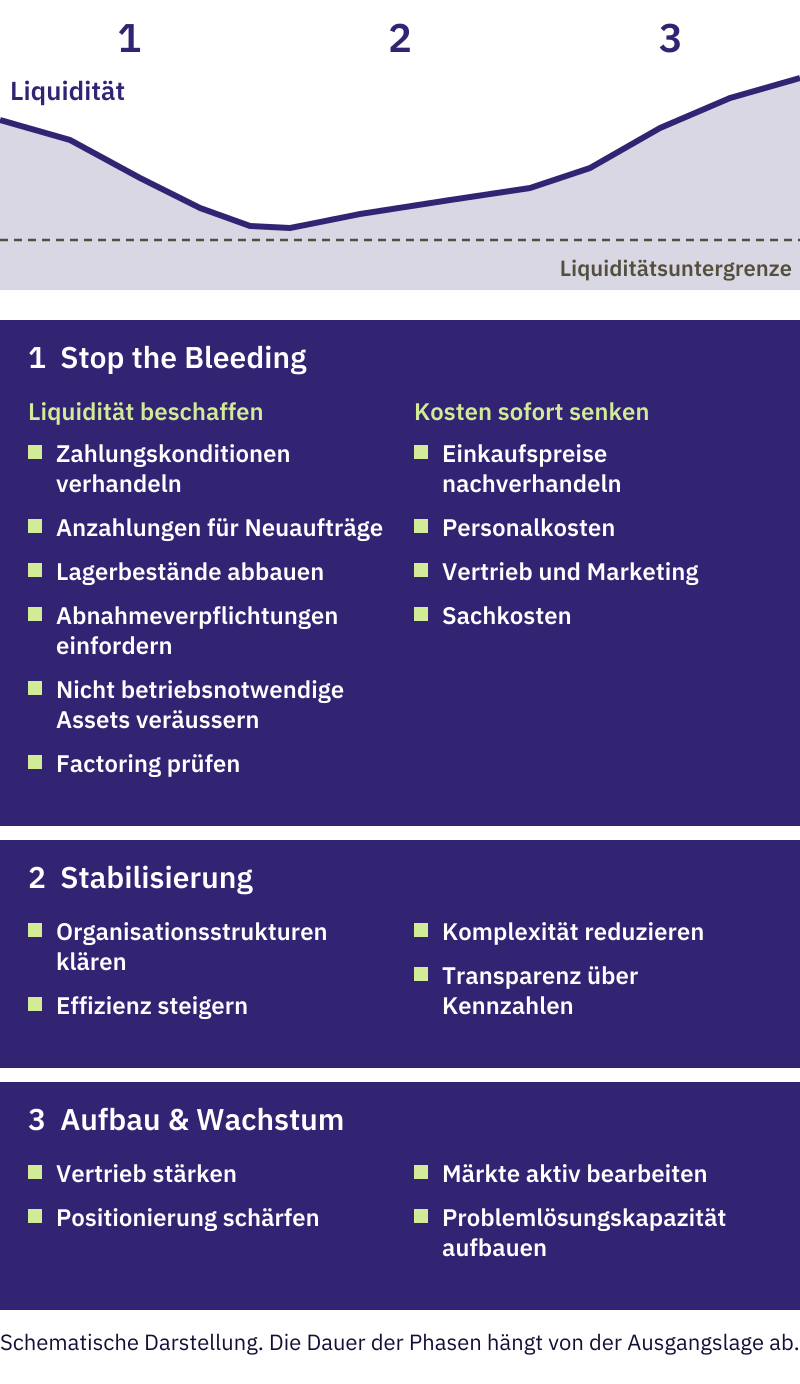
Sanierung in drei Phasen: Stop the Bleeding mit Liquiditätsbeschaffung und Sofortmassnahmen bei den Kosten, Stabilisierung, Aufbau und Wachstum

Earnings

Recovery plan for the P&L: where future earnings will come from

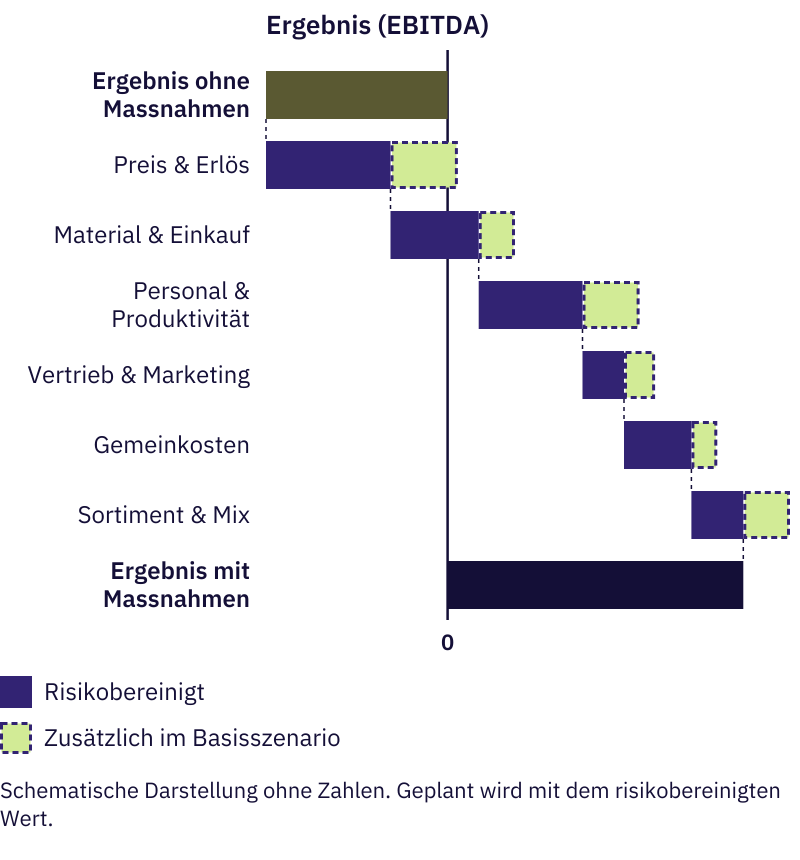
A recovery only holds if the company makes money again. What matters is therefore not the list of cost cuts, but the question of which products, customers and prices will generate positive contribution margins in future – and which costs this requires.

Every measure needs an amount, a date, a responsible person and an honest assessment of how likely it is to materialise. Lenders calculate with the risk-adjusted value – and the company should too.

Sanierungsplanung GuV: Brücke vom negativen zum positiven EBITDA über Preis und Erlös, Material und Einkauf, Personal und Produktivität, Vertrieb und Marketing, Gemeinkosten sowie Sortiment und Mix

Liquidity

Liquidity and cash-flow planning: how long the funds will last

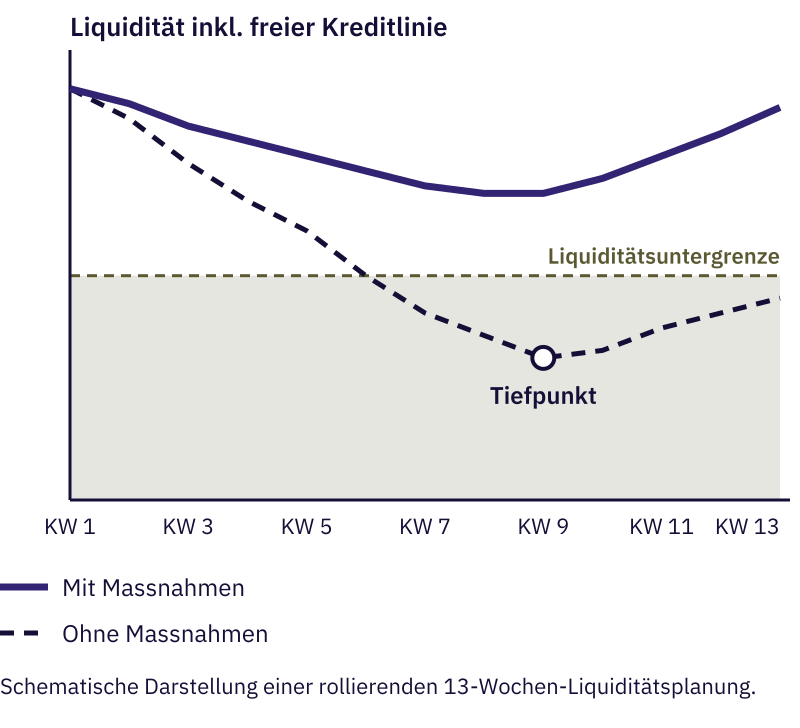
In a recovery, liquidity determines the room for manoeuvre. Three questions must be answerable at all times: When is the liquidity low point? Is the cash flow sufficient for interest and repayments? And how much liquidity can be released from inventories, receivables and supplier terms?

A rolling 13-week plan shows the low point; the integrated plan of income statement, balance sheet and cash flow shows debt service capacity over the coming years. Working capital buys time once; only a positive operating cash flow carries the company in the long run. Both are the basis for every discussion with banks and for a recovery opinion.

13-Wochen-Liquiditätsplanung: Verlauf der Liquidität mit und ohne Massnahmen gegenüber der Liquiditätsuntergrenze

Balance

Cut costs and invest selectively – at the same time

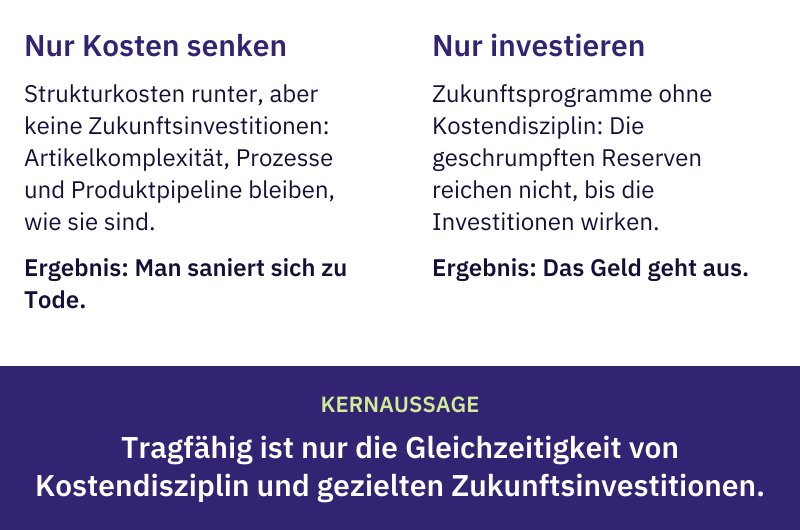
The greatest risk in a turnaround is a one-sided programme. Cutting costs only leads to death by saving: structural costs fall, but product complexity, processes and the product pipeline stay as they are. Investing only runs out of money before the investments take effect.

Only cost discipline combined with targeted investment in the future is sustainable – in products, in sales and in the systems that create transparency about processes.

Das Sanierungs-Dilemma: Wer nur Kosten senkt, saniert sich zu Tode; wer nur investiert, dem geht das Geld aus. Tragfähig ist nur die Gleichzeitigkeit von Kostendisziplin und gezielten Zukunftsinvestitionen.
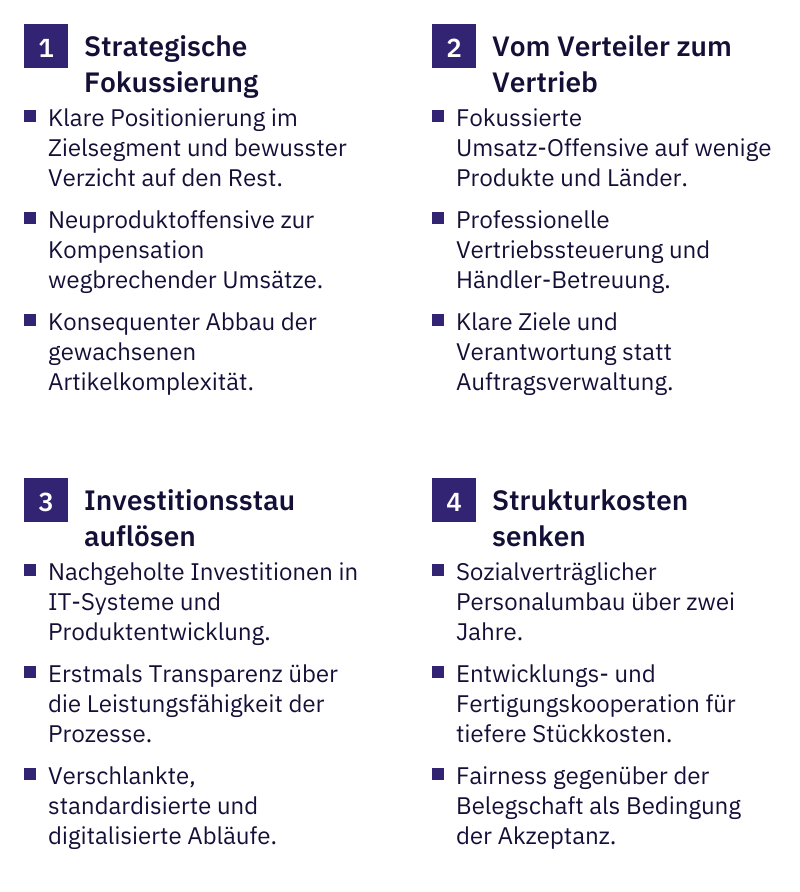
Die vier Handlungsfelder der Sanierung im Fallbeispiel: strategische Fokussierung, vom Verteiler zum Vertrieb, Investitionsstau auflösen, Strukturkosten senken

IN PRACTICE: a case study

When the flagship product becomes a risk

A power tool manufacturer with sales of around EUR 200 million had relied on a patent-protected product for decades. When the patent expired, sales collapsed, reserves shrank and necessary investments could no longer be financed from current operations.

The turnaround addressed four fields of action at once: strategic focus, a sales organisation that sells again instead of allocating, clearing the investment backlog in IT and product development, and a socially responsible workforce adjustment over two years.

Today, the structural course is set: process performance is measurable for the first time, and the company once again has a clear answer to the question of what it wants to stand for in the market.

Read the turnaround case study

YOUR ROLE, OUR ROLE

Support, CRO or interim management

As support to the management, we bring method, planning and pace to the turnaround – responsibility stays with you.

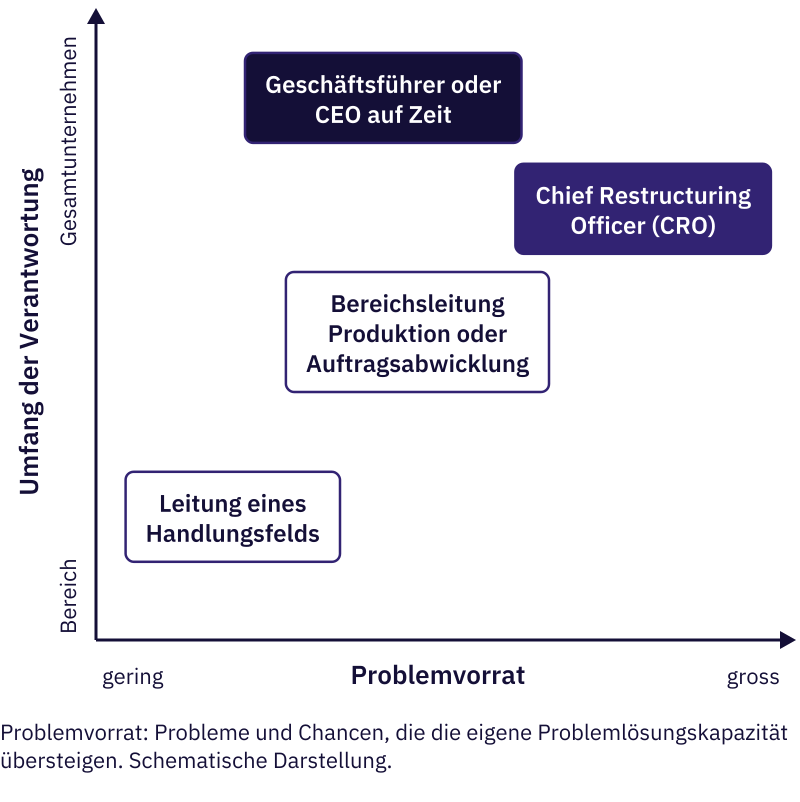
As Chief Restructuring Officer (CRO), we are responsible for the turnaround alongside the existing management. Or we take over management ourselves for as long as it takes.

One example: as CRO of a tool manufacturer with around 300 employees, we implemented a liquidity plan, immediate measures, inventory reduction, purchasing savings and a sharpened positioning over ten months.

More about interim management
Rollen auf Zeit nach Umfang der Verantwortung und Problemvorrat: Leitung eines Handlungsfelds, Bereichsleitung, Geschäftsführer oder CEO, Chief Restructuring Officer

ASSESSMENT: where does your company stand?

The sooner the situation is clear, the more options remain

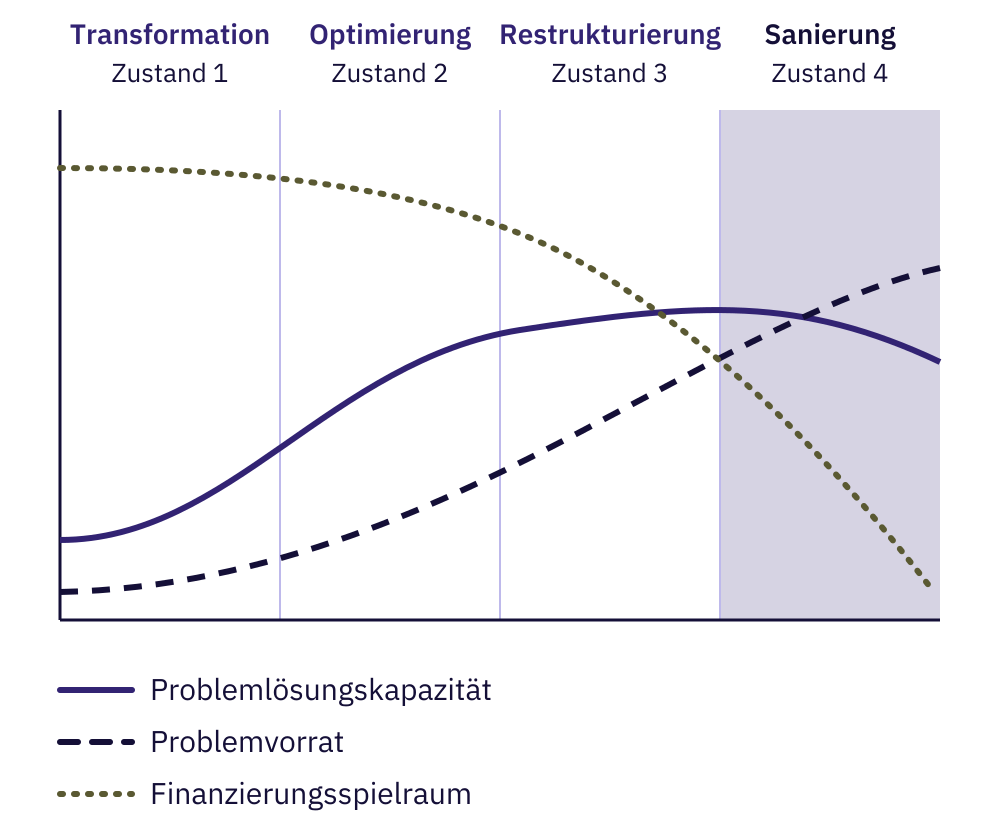
Between restructuring and turnaround lies the financing headroom. Those who act early decide on the measures themselves. Those who act too late have the pace set by lenders and creditors.

The earlier you get in touch, the more room for manoeuvre remains. An initial conversation is free of charge and confidential.

If you would like an initial assessment first, use the Quick Health Check: completed in five minutes and reviewed by an experienced consultant as a five-page profile.

Arrange an initial conversation

Our key topics

With tailored approaches and proven methods, we support you in aligning and developing your company — independently, and starting from your current economic situation.

Transformation

Sharpen your strategy and develop a holistic alignment to realize growth opportunities.

Learn more

Optimization

Increase your problem-solving capacity and develop your organization from mediocrity to peak performance.

Learn more

Restructuring

Secure your company's viability through structural interventions and sustainable earnings optimization.

Learn more
Sanierung: Fertigungsbereich eines Industrieunternehmens mit Anlagen und Mitarbeitenden in Bewegung

Turnaround

Secure your company's liquidity and continued existence and restore its earning power for the long term.

Learn more

FREQUENTLY ASKED QUESTIONS

Frequently asked questions about turnaround

What is the difference between restructuring and turnaround?

In restructuring, the company can still act on its own: earnings are falling and the backlog of problems is growing, but the financing headroom is sufficient for an orderly transformation. In a turnaround, this headroom is largely used up – liquidity, equity or the support of lenders are at stake. Securing solvency then takes priority over everything else.

How do I know whether my company needs a turnaround?

Not only when liquidity becomes tight. Early signs are A customers leaving, high performers resigning and investments that can no longer be financed from ongoing business. At the latest when lenders demand covenants, risk premiums or additional collateral, a quick and honest assessment of the situation is needed.

Do you also take on operational responsibility?

Yes. If required, we take over as interim managing director or as Chief Restructuring Officer (CRO), who is responsible for the turnaround alongside the existing management. Our goal is to set up the organisation so that it can move forward without external support afterwards.

Do you prepare formal turnaround opinions or advise on insolvency law?

No. Formal turnaround opinions and legal questions belong with specialised auditors and lawyers. We are responsible for the operational side of the turnaround and provide the figures and plans on which these assessments are based.

What duties does management have in a crisis?

As a crisis deepens, the legal duties of management and the board increase – in Switzerland under Art. 725 et seq. of the Code of Obligations, in Germany under the StaRUG and the Insolvency Code, among others. The legal assessment belongs with specialised lawyers. We provide the liquidity and recovery planning on which that assessment is based.

Which companies do you work for?

For industrial SMEs and mid-sized companies in German-speaking Switzerland and southern Germany, with a focus on machinery and plant engineering, tools and metalworking.

What do lenders and shareholders expect in a turnaround?

Above all, clarity and reliability: a rolling liquidity plan, an integrated plan without and with measures, a list of measures with owners and status, and regular, honest reporting. We prepare these documents and present them together with the management.

Subscribe now

Newsletter

Receive regular insights into the practical application of Institutional Learning.
Thank you! Your submission has been received!
Oops! Something went wrong while submitting the form.